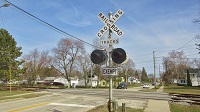
I tried typing the DOT number in multiple times without mistakes.
I get "Crossing number is invalid!"
I tried looking at every crossing on the Orlando section.
It wasn't even on the list.
Refer to me as 'Nari' - He/She are my preferred pronouns
I tried typing the DOT number in multiple times without mistakes.
I get "Crossing number is invalid!"
I tried looking at every crossing on the Orlando section.
It wasn't even on the list.
I can't read the dot number as it isn't clear enough.
I tried typing the DOT number in multiple times without mistakes.
I get "Crossing number is invalid!"
I tried looking at every crossing on the Orlando section.
It wasn't even on the list.
I can't read the dot number as it isn't clear enough.
The FRA has a on-line map if you are good with pinpointing certain areas. The crossing ID is 622336P. Here is the link to the map: http://fragis.fra.dot.gov/GISFRASafety/
I just zoomed out on the Google Map link that you provided and realized the crossing was just west of Orlando International Airport. That's not hard to find on any map. And viola!
What point am I missing? I think you are missing the point that it's illegal for any crossing to not be documented by the FRA. Sometimes DOT numbers on relay cases are incorrect, and that's at the fault of the railroad.
What point am I missing? I think you are missing the point that it's illegal for any crossing to not be documented by the FRA. Sometimes DOT numbers on relay cases are incorrect, and that's at the fault of the railroad.
Also, aren't some light rail systems allowed not to have DOT numbers on their crossings?
NathanFromEngland wrote:I've just tried posting with the quotes, but my text ain't appearing at the bottom for some reason.
Anyway, i just tried putting the DOT number in on the Crossing Inventory and Accident page, i couldn't fit the last character in, the letter P!
Did you include any spaces, hyphens, or extra characters? The DOT numbers themselves are only seven characters long (six numbers and a letter, example: 123456G), but some railroads will stylize their DOT numbers with spaces and/or hyphens (examples: "123 456G", "123-456G"; these are the two most common ways I've seen it done other than the official "123456G"). You'll need to exclude any spaces or hyphens if you want to look-up a DOT number on the FRA's website, as the input field only allows seven characters to be typed in.
NathanFromEngland wrote:I've just tried posting with the quotes, but my text ain't appearing at the bottom for some reason.
Anyway, i just tried putting the DOT number in on the Crossing Inventory and Accident page, i couldn't fit the last character in, the letter P!
Did you include any spaces, hyphens, or extra characters? The DOT numbers themselves are only seven characters long (six numbers and a letter, example: 123456G), but some railroads will stylize their DOT numbers with spaces and/or hyphens (examples: "123 456G", "123-456G"; these are the two most common ways I've seen it done other than the official "123456G"). You'll need to exclude any spaces or hyphens if you want to look-up a DOT number on the FRA's website, as the input field only allows seven characters to be typed in.
Got it now, whats strange is a majority of them are owned by this company called Central Florida Commuter Rail Transit, that is incorrect. There is a CSX yard not far from the crossing.
Refer to me as 'Nari' - He/She are my preferred pronouns


 )
)