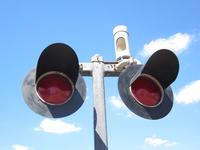
Beacons like that at stop signs are very common in rural parts of Florida.
I'm referring to how the signals aren't facing the opposite direction.
I'm not sure if I follow what you mean by the signals not facing the opposite direction.
It is kind of self-explanatory although I could have explained that better, typically when span wire or a mast arm is over a piece a road, the signals would be facing towards the intersection.
I still don't think I'm following... could you perhaps share an example of what you mean as comparison?
At this intersection the signals are facing away from the intersection.
While at this intersection the signals are facing toward the intersection.
I guess that's just not common where you are. A lot of signals in Florida are configured like that where the signals facing towards their proper side of the road are on the closer side to the driver.
ZachL wrote:I guess that's just not common where you are. A lot of signals in Florida are configured like that where the signals facing towards their proper side of the road are on the closer side to the driver.
Yes... I know exactly what you mean. This intersection below comes to mind. You pull up to the line at a red light and the signals are practically over your hood. You have to lean forward and look up to watch for the signal to change.
I understand them not wanting to use as many cantilevers (I guess for ease of installation)... but in some cases it's a bit ridiculous.
ZachL wrote:I guess that's just not common where you are. A lot of signals in Florida are configured like that where the signals facing towards their proper side of the road are on the closer side to the driver.
Yes... I know exactly what you mean. This intersection below comes to mind. You pull up to the line at a red light and the signals are practically over your hood. You have to lean forward and look up to watch for the signal to change.
I understand them not wanting to use as many cantilevers (I guess for ease of installation)... but in some cases it's a bit ridiculous.
ZachL wrote:I guess that's just not common where you are. A lot of signals in Florida are configured like that where the signals facing towards their proper side of the road are on the closer side to the driver.
Yes... I know exactly what you mean. This intersection below comes to mind. You pull up to the line at a red light and the signals are practically over your hood. You have to lean forward and look up to watch for the signal to change.
I understand them not wanting to use as many cantilevers (I guess for ease of installation)... but in some cases it's a bit ridiculous.
Slowly but surely, the span wire signals are being replaced by more traditional cantilevers though. Here are a couple of intersections caught when they were in the middle of the process:
ZachL wrote:I guess that's just not common where you are. A lot of signals in Florida are configured like that where the signals facing towards their proper side of the road are on the closer side to the driver.
Yes... I know exactly what you mean. This intersection below comes to mind. You pull up to the line at a red light and the signals are practically over your hood. You have to lean forward and look up to watch for the signal to change.
I understand them not wanting to use as many cantilevers (I guess for ease of installation)... but in some cases it's a bit ridiculous.
Slowly but surely, the span wire signals are being replaced by more traditional cantilevers though. Here are a couple of intersections caught when they were in the middle of the process:
It's really odd how they pick and choose what intersection gets what. I would assume the span wire is a cheaper and easier install, so I guess it just boils down to economics and such.
cabman701 wrote:It's really odd how they pick and choose what intersection gets what. I would assume the span wire is a cheaper and easier install, so I guess it just boils down to economics and such.
cabman701 wrote:It's really odd how they pick and choose what intersection gets what. I would assume the span wire is a cheaper and easier install, so I guess it just boils down to economics and such.
It also depends on the district/municipality.
Not here at least! I'd say it really is 50/50 between spanwire and poles going up here.
I wonder why they installed traffic signals here, kind of odd that they didn't do it on the other side of the crossing, I can't image that these are preemption for the traffic intersection after the crossing. https://www.google.com/maps/@42.3192685 ... 6656?hl=en