

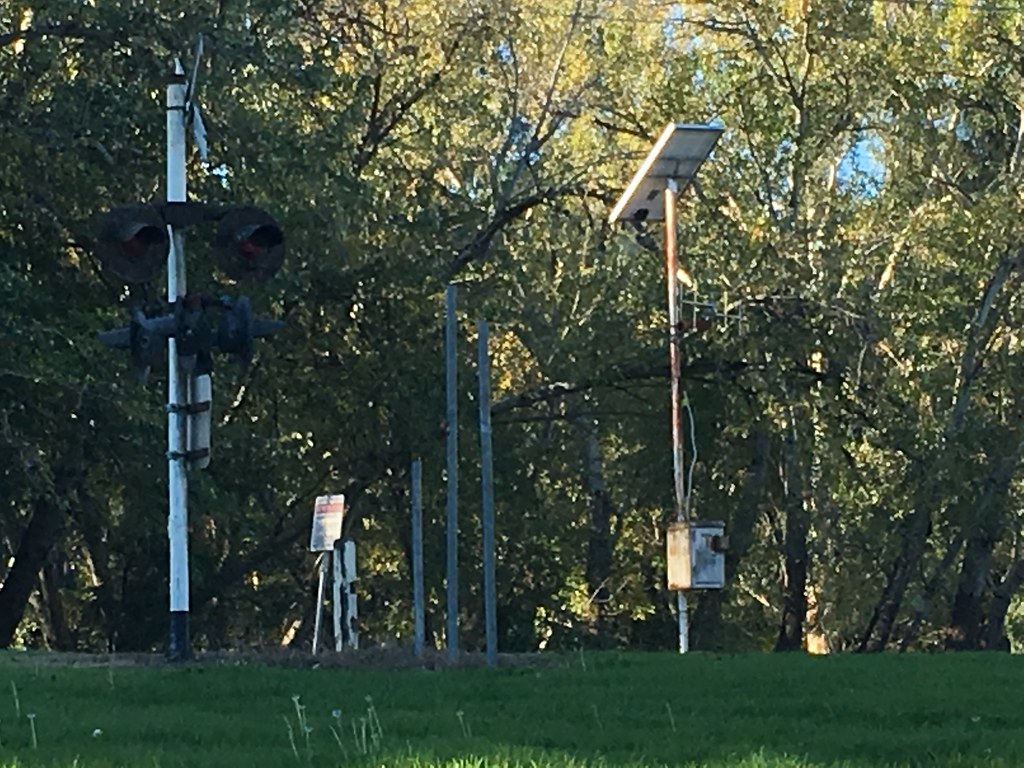
First of all, I've found out the reasons why the Healesville-Kinglake Rd crossing is activated by remote control. The first reason is the poor condition of the rails which are far too rusty for track circuits to accurately detect trains. The other reason is that using remote activation allows the crossing to operate completely on solar power, as a constant supply of voltage to the track circuits (which almost all regular crossing installations require) isn't needed. Instead, the crossing only uses power when activated, allowing the battery to be recharged by the solar panel at all other times. You can see the solar panel and small relay box in this image as well as the antenna for the remote sticking out the side (sorry about the quality, this was the best I could do at the time):
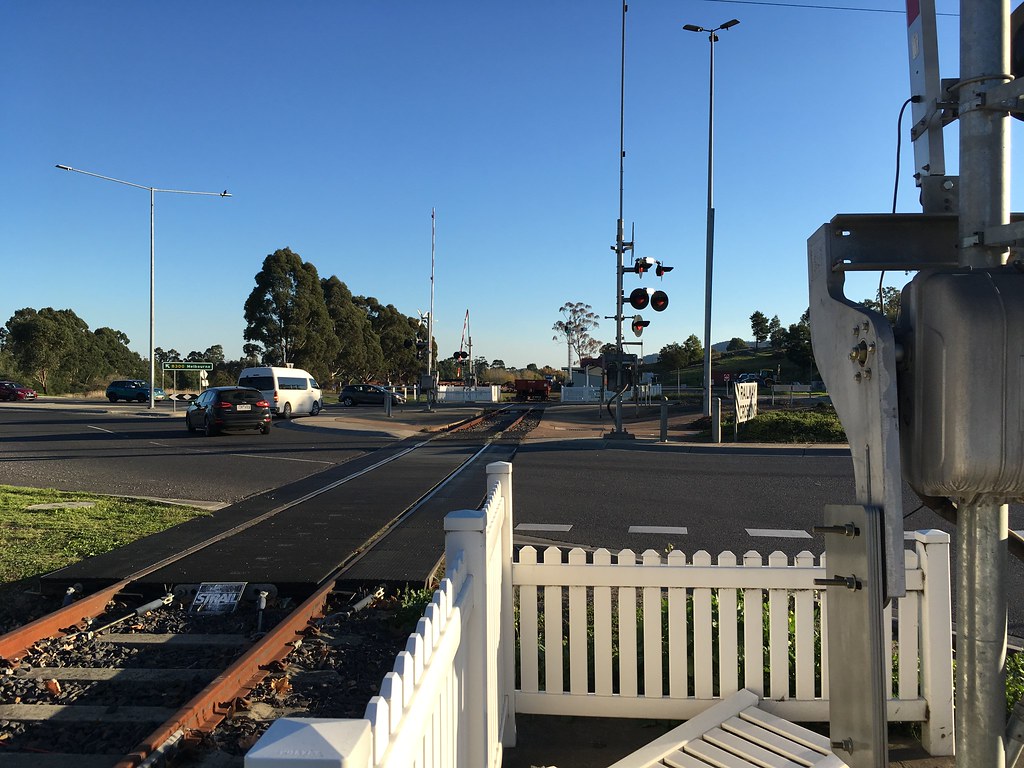
Unfortunately, I was told that this crossing will soon be upgraded with gates due to a request from the Victorian Government to do so. Victrack have been contracted to do the installation and the project is currently in its planning stages. Apparently, this is considered a "high risk" crossing. He told me that the railway and its staff have no control over the upgrade, as it is being funded by the Government who will not allow them to continue operations without it taking place. This is exactly what happened at Yarra Glen, where they where forced to upgrade the Melba Hwy crossing before any other track/infrastructure work in the area could be completed. Speaking of which, that crossing has never been used by a single train since it received boom gates and still has missing tracks on both sides:


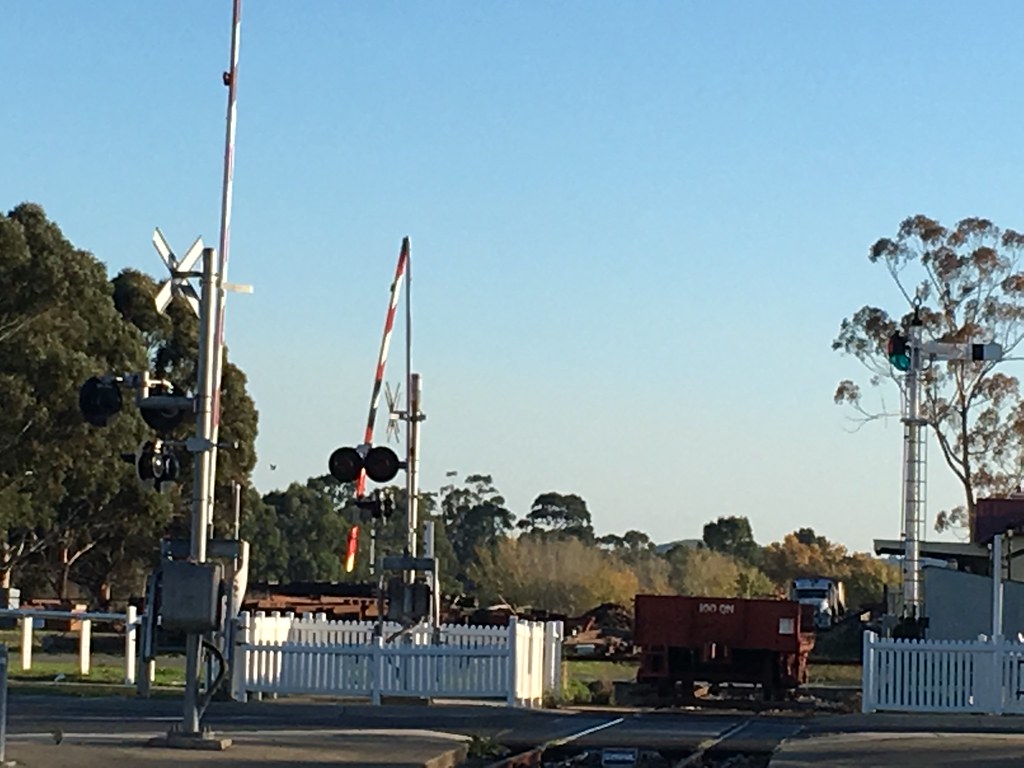
Also, the boom gate on the Melbourne side of the crossing is broken and has been for many years. Again, the crossing has NEVER been used!:
I'm told that the railway wanted to keep the original signals as spares or to put on display, but Victrack got rid of them before anything could be done. Since the Yarra Valley Railway owned the line at Yarra Glen (and as a result, the crossing signals), they would regularly test the crossing about once or twice a month to ensure that the equipment remained in a healthy, working state and to avoid parts ceasing up and rusting away into disrepair. The crossing was never deactivated and was always ready to warn of an approaching train, so volunteers would sometimes use jumper cables to simulate an approaching train and start the crossing that way (though they would often just use the test switch on the relay cabinet). They would let the signals run for about a minute or so before shutting them off again. Of course, this turned out to be pointless, but the staff really cared for the equipment as they believed it would still be usable when trains returned to the area. Apparently, most of the volunteers were not happy about the loss of the old signals and think the new installation looks too modern (which I certainly agree with). In addition, due to some ridiculous complication with the new installation, the railway is unable to test or use the gated crossing in any way as it still hasn't been fully handed over to them from Victrack.
Finally, I found out some very interesting info about Teardrop Bells and why they are disappearing so fast. According to the volunteer I spoke to, Teardrops (and all mechanical bells in general) are no longer approved for use in Victoria and cannot be installed on the state's railways. Exceptions may apply for places like Puffing Billy or for temporary "quick fix" replacements until an E-Bell can be sourced and fitted, but major rail operators can't use them for new permanent installs and upgrades. This explains why V/Line, Metro and ARTC have been so busy replacing as many M-Bells as possible, as they want to comply with the regulations. The same goes for incandescent lights as well. It's very worrying to know that these replacements are actually being legally enforced by Government. We just have to hope that private collectors are able to obtain some of this historical equipment, otherwise it will all be gone.

Sorry about this being such a long post but I hope you guys found it interesting.


